
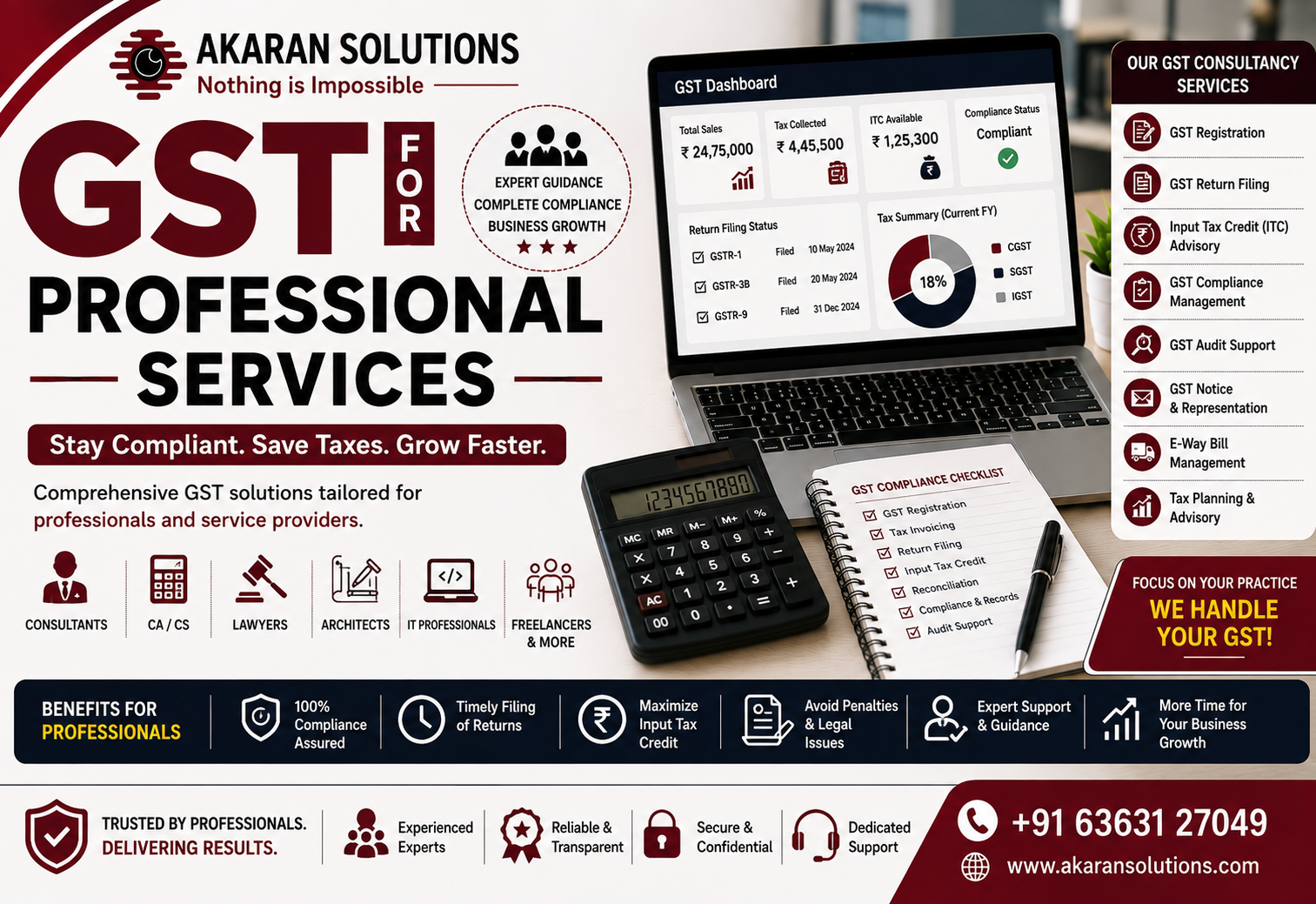
Professionals such as Chartered Accountants, Architects, Lawyers, Doctors, Engineers, Consultants, Interior Designers, Digital Marketing Agencies, IT Professionals, and Freelancers play a vital role in India’s growing service economy. As their businesses expand, understanding GST for Professional Services becomes essential to ensure legal compliance and efficient financial management.
Goods and Services Tax (GST) applies to most professional services provided in India. Professionals earning above the prescribed turnover threshold are required to register under GST, issue tax invoices, collect GST from clients, file returns, and maintain proper records. Failure to comply with GST regulations can result in penalties, interest, and unnecessary legal complications.
This comprehensive guide explains everything you need to know about GST for Professional Services, including registration requirements, GST rates, invoicing, Input Tax Credit (ITC), return filing, compliance, and common mistakes to avoid.
What is GST for Professional Services?
GST for Professional Services refers to the Goods and Services Tax applicable to services provided by professionals in various industries. The GST system ensures that taxes are collected on the supply of taxable services while allowing eligible businesses to claim Input Tax Credit on business-related purchases.
Professional services include:
- Chartered Accountancy Services
- Legal Services
- Engineering Consultancy
- Architectural Services
- Interior Design
- Business Consultancy
- Digital Marketing Services
- Software Development
- IT Consulting
- Financial Advisory
- Freelance Services
- Advertising Services
- Management Consultancy
The applicable GST rate depends on the nature of the service, but many professional services attract 18% GST under current regulations.
Why is GST Important for Professionals?
GST compliance is not just a legal obligation—it also enhances credibility and transparency in business operations.
Professional GST compliance helps:
- Operate legally
- Build client trust
- Avoid tax penalties
- Claim Input Tax Credit
- Maintain proper financial records
- Expand business opportunities
- Participate in government and corporate contracts
Professionals who comply with GST regulations are often preferred by corporate clients and large organizations.
Who Needs GST Registration?
GST registration is mandatory when a professional’s aggregate annual turnover exceeds the threshold prescribed under GST law or when registration is required under specific provisions.
Professionals who may require GST registration include:
- Chartered Accountants
- Company Secretaries
- Advocates (subject to applicable GST provisions)
- Architects
- Engineers
- Interior Designers
- Consultants
- IT Professionals
- Software Developers
- Marketing Agencies
- Freelancers
- Event Management Companies
Even if registration is not mandatory, some professionals choose voluntary registration to enhance business credibility and claim Input Tax Credit.
GST Rate on Professional Services
Most professional services are taxed at 18% GST. However, the applicable rate may vary depending on the type of service and prevailing GST notifications.
Examples include:
| Professional Service | Typical GST Rate |
|---|---|
| Business Consultancy | 18% |
| IT Services | 18% |
| Software Development | 18% |
| Marketing Services | 18% |
| Architectural Services | 18% |
| Engineering Consultancy | 18% |
| Interior Design | 18% |
| Accounting Services | 18% |
Professionals should verify the correct SAC (Service Accounting Code) and applicable GST rate for their services.
GST Registration Process
The GST registration process generally involves:
Step 1: Prepare Required Documents
Common documents include:
- PAN Card
- Aadhaar Card
- Business Address Proof
- Bank Account Details
- Photograph
- Mobile Number
- Email ID
Step 2: Submit Online Application
Applicants complete the GST registration process through the GST Portal by providing business and personal details.
Step 3: Verification
Authorities verify the submitted information and documents.
Step 4: GSTIN Allotment
After successful verification, a GST Identification Number (GSTIN) is issued.
GST Invoice Requirements
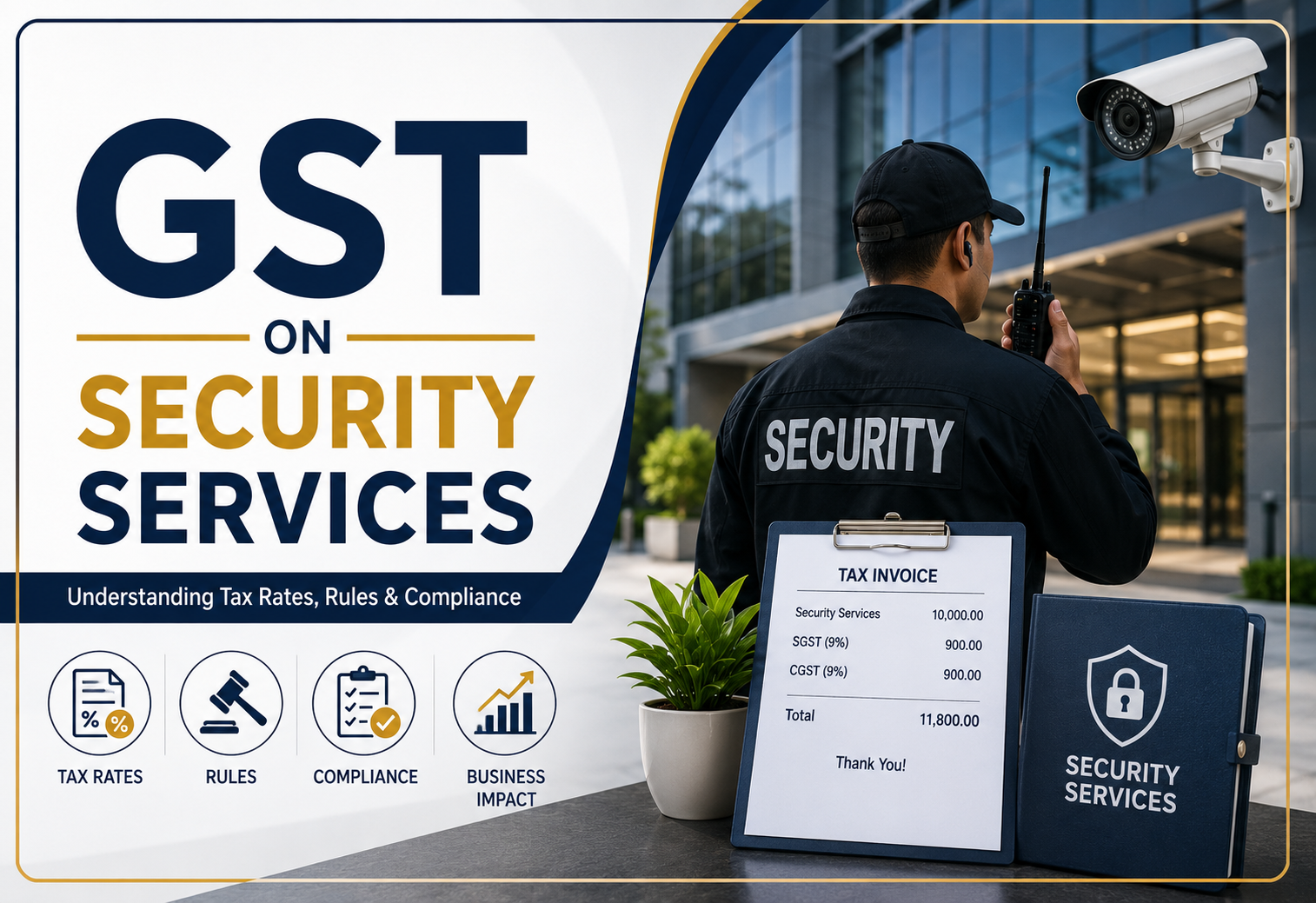
Professionals registered under GST must issue tax invoices containing mandatory details such as:
- Business Name
- GSTIN
- Invoice Number
- Invoice Date
- Client Details
- SAC Code
- Description of Services
- Taxable Value
- CGST, SGST or IGST
- Total Invoice Amount
Proper invoicing helps ensure smooth compliance and accurate return filing.
Input Tax Credit (ITC) for Professionals
One of the major benefits of GST registration is the ability to claim Input Tax Credit.
Professionals may claim ITC on eligible business expenses such as:
- Office Rent
- Office Equipment
- Computer Systems
- Internet Services
- Professional Software
- Business Travel
- Office Furniture
- Stationery
- Printing Costs
- Advertising Expenses
Proper documentation is necessary to claim ITC successfully.
GST Return Filing for Professionals
Registered professionals are required to file GST returns periodically based on the applicable return system.
Common GST returns include:
- GSTR-1
- GSTR-3B
- Annual Return (where applicable)
Timely filing helps avoid:
- Late fees
- Interest
- Compliance notices
- ITC restrictions
Maintaining an organized accounting system simplifies the filing process.
Benefits of GST Registration for Professionals
Professional GST registration offers several advantages.
Improved Business Credibility
Clients often prefer working with GST-registered professionals.
Input Tax Credit
Eligible professionals can reduce overall tax costs through ITC.
Business Expansion
GST registration enables professionals to work with large organizations and government departments.
Better Financial Management
GST compliance encourages systematic accounting practices.
Legal Compliance
Timely GST filing helps avoid penalties and ensures smooth business operations.
Common GST Compliance Mistakes
Professionals often make avoidable mistakes such as:
- Delayed registration
- Incorrect GST rate selection
- Wrong SAC Code
- Late return filing
- Missing invoices
- Failure to reconcile ITC
- Incorrect tax calculations
- Ignoring GST updates
Working with GST experts or using reliable accounting software can help prevent these issues.
Best Practices for GST Compliance
Professionals should follow these practices:
- Maintain digital records
- Issue invoices promptly
- File returns before due dates
- Reconcile books regularly
- Track Input Tax Credit
- Monitor GST notifications
- Maintain supporting documents
- Seek expert advice when needed
Consistent compliance reduces business risks and ensures smooth tax management.
Why Choose Professional GST Assistance?
Managing GST independently can become challenging as business operations grow.
Professional GST consultants help with:
- Registration
- Return Filing
- GST Advisory
- ITC Management
- Audit Support
- Notice Handling
- Compliance Monitoring
- Tax Planning
Expert assistance saves time while ensuring complete compliance.
Frequently Asked Questions (FAQs)
1. What is GST for Professional Services?
GST for Professional Services refers to the tax applicable to services provided by professionals such as consultants, accountants, architects, IT professionals, and other service providers.
2. Is GST registration mandatory for professionals?
GST registration is required when the aggregate turnover exceeds the prescribed threshold or when registration becomes mandatory under GST provisions.
3. What is the GST rate for professional services?
Many professional services are generally taxed at 18% GST, subject to the applicable GST classification and government notifications.
4. Can professionals claim Input Tax Credit?
Yes. Registered professionals can claim Input Tax Credit on eligible business-related purchases, provided they meet GST conditions.
5. Which GST returns should professionals file?
Depending on their registration and compliance requirements, professionals may need to file GSTR-1, GSTR-3B, and annual returns where applicable.
6. What happens if GST returns are filed late?
Late filing may attract late fees, interest, and compliance notices, making timely filing essential.
7. Should freelancers register under GST?
Freelancers providing taxable services may need GST registration based on their turnover and applicable GST provisions.
Understanding GST for Professional Services is essential for every professional who wants to run a compliant and financially efficient practice. From GST registration and invoicing to Input Tax Credit and return filing, every aspect of GST contributes to better financial management and business credibility.
Whether you are a consultant, freelancer, architect, IT professional, accountant, or service provider, staying compliant with GST regulations helps you avoid penalties, improve client confidence, and create opportunities for business growth. Partnering with experienced GST professionals can further simplify compliance and allow you to focus on delivering exceptional services to your clients.
