
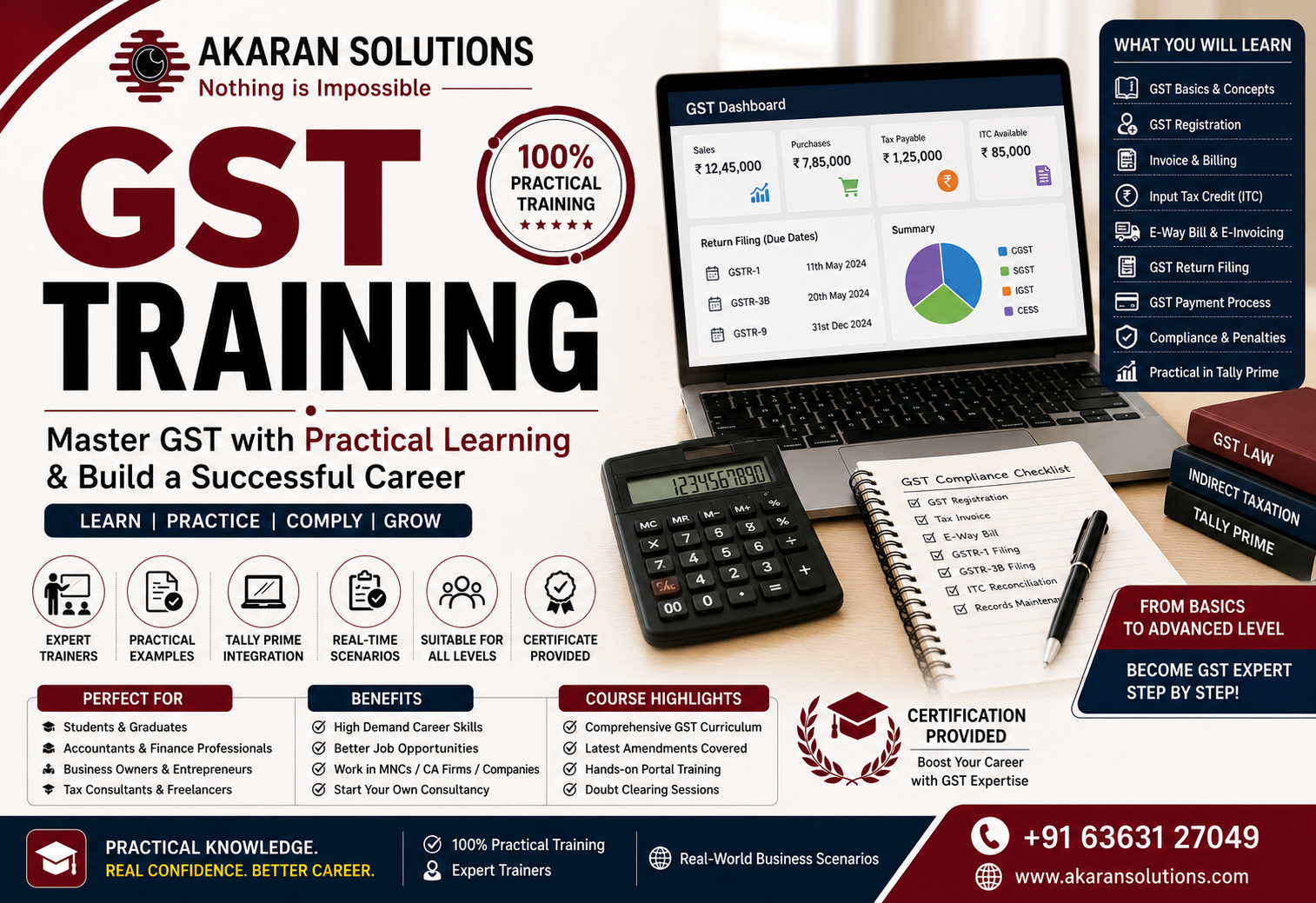
The introduction of the Goods and Services Tax (GST) transformed India’s indirect taxation system by replacing multiple taxes with a unified framework. Today, GST compliance has become an integral part of every business, regardless of its size or industry. From issuing tax invoices and maintaining records to filing GST returns accurately, organizations require skilled professionals who understand GST regulations and compliance procedures.
This growing demand has made GST Training one of the most valuable skill-development programs for students, accountants, entrepreneurs, finance professionals, and business owners. A structured GST training program equips learners with practical knowledge of GST laws, registration procedures, return filing, input tax credit (ITC), invoicing, and compliance requirements.
Whether you are starting your career in accounting or looking to upgrade your taxation skills, investing in professional GST Training can open doors to numerous career opportunities. This guide explains everything you need to know about GST Training, including its importance, syllabus, benefits, career scope, and why practical learning matters.
What is GST?
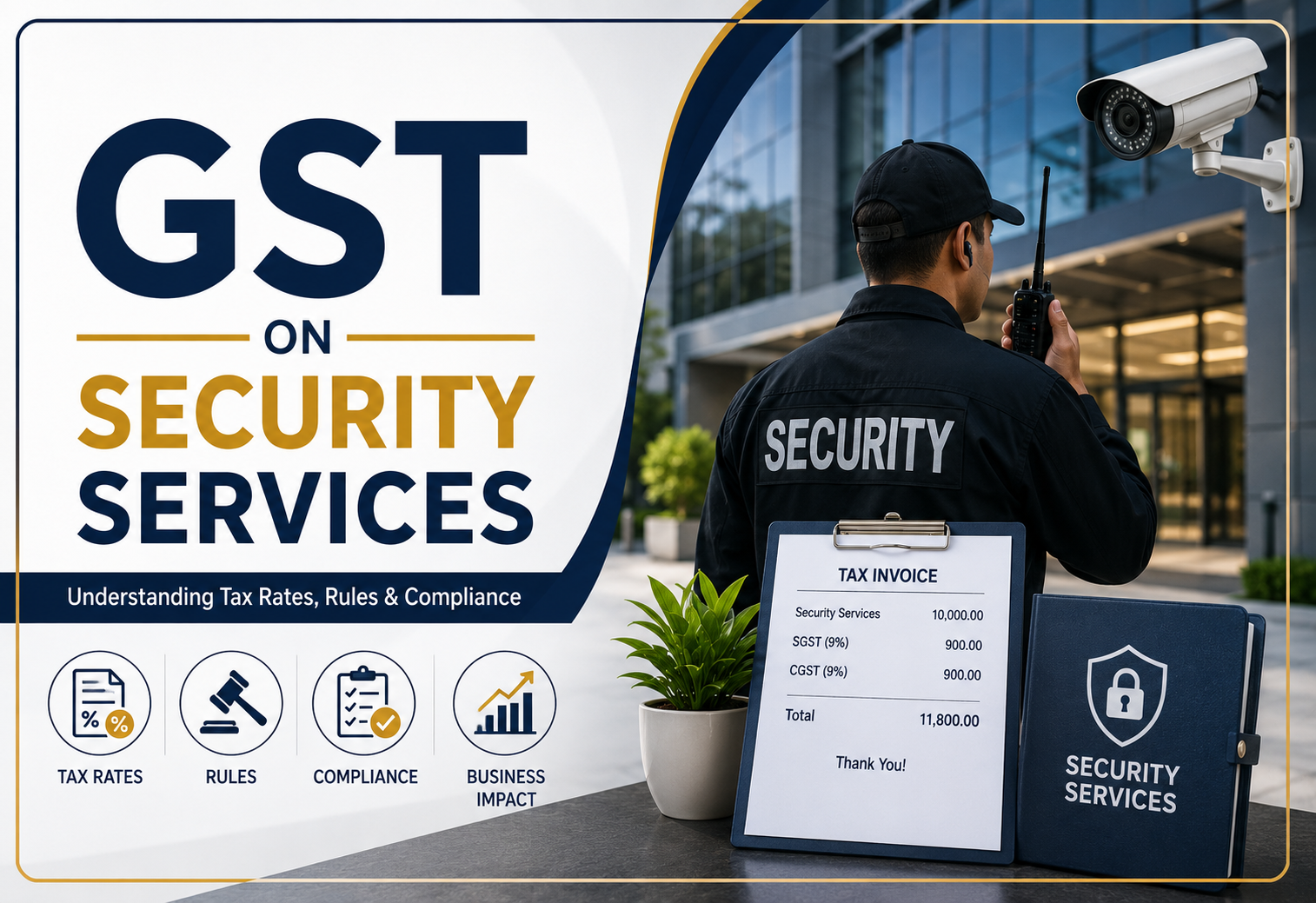
Goods and Services Tax (GST) is a destination-based indirect tax levied on the supply of goods and services in India. Introduced on 1 July 2017, GST replaced several indirect taxes such as VAT, Service Tax, Central Excise Duty, Entry Tax, and Luxury Tax with a single tax system.
GST is divided into different categories:
- Central GST (CGST)
- State GST (SGST)
- Integrated GST (IGST)
- Union Territory GST (UTGST)
The GST framework simplifies taxation, promotes transparency, and reduces the cascading effect of taxes.
What is GST Training?
GST Training is a professional course designed to provide learners with both theoretical and practical knowledge of GST laws and compliance. The training focuses on real-time business scenarios, enabling participants to confidently manage GST-related tasks in an organization.
Unlike traditional classroom learning, practical GST Training emphasizes hands-on experience using GST portals, accounting software such as Tally Prime, and real business transactions.
A comprehensive GST Training program helps learners understand:
- GST concepts
- GST registration
- Tax invoices
- Input Tax Credit (ITC)
- GST return filing
- E-Way Bills
- E-Invoicing
- GST compliance
- Practical accounting entries
- Latest GST amendments
Why is GST Training Important?
Every registered business must comply with GST regulations. Incorrect filing or non-compliance can result in penalties, notices, and financial losses.
Professional GST Training helps individuals and businesses:
- Understand GST laws accurately
- File GST returns correctly
- Avoid penalties
- Improve tax compliance
- Manage GST documentation efficiently
- Handle GST audits confidently
- Stay updated with changing GST rules
As GST regulations continue to evolve, trained professionals are highly sought after in every industry.
Who Should Join GST Training?
GST Training is suitable for beginners as well as experienced professionals.
It is ideal for:
- Commerce students
- B.Com graduates
- MBA Finance students
- Chartered Accountancy students
- Cost Accountancy students
- Company Secretary students
- Accountants
- Finance Executives
- Tax Consultants
- Business Owners
- Entrepreneurs
- Freelancers
- Payroll Executives
- Small and Medium Business Owners
No advanced taxation knowledge is required for beginner-level GST Training programs.
Topics Covered in GST Training
A professional GST Training course covers all essential aspects of GST compliance.
1. Basics of GST
Participants learn:
- Introduction to GST
- Objectives of GST
- Types of GST
- GST structure
- Supply under GST
- Taxable person
- Composition Scheme
2. GST Registration
The registration module includes:
- Eligibility criteria
- Threshold limits
- Documents required
- Online registration process
- Amendment of registration
- Cancellation of GST registration
- Revocation process
Learners also gain hands-on experience with the GST Portal.
3. GST Invoice Preparation
Correct invoicing is one of the most important GST requirements.
Training includes:
- Tax invoice format
- Bill of Supply
- Debit Note
- Credit Note
- Revised Invoice
- Export Invoice
- Reverse Charge Invoice
Practical invoice preparation is usually covered using accounting software.
4. Input Tax Credit (ITC)
Input Tax Credit helps businesses reduce their tax liability.
Topics include:
- ITC eligibility
- Blocked credits
- ITC reconciliation
- ITC reversal
- Claim procedures
- Matching concepts
Understanding ITC is essential for accurate GST compliance.
5. GST Return Filing
Participants receive practical training on filing returns such as:
- GSTR-1
- GSTR-3B
- GSTR-9
- GSTR-9C
- CMP-08
- Annual Return
The course explains due dates, filing procedures, corrections, and common filing errors.
6. E-Way Bill System
Businesses transporting goods above the prescribed value must generate E-Way Bills.
Training covers:
- Generation process
- Validity
- Cancellation
- Vehicle updates
- Practical portal usage
7. E-Invoicing
Many businesses are required to generate electronic invoices.
Topics include:
- Applicability
- Invoice Registration Portal (IRP)
- QR Codes
- Digital validation
- Compliance requirements
8. GST Payment Process
Participants learn:
- GST challan generation
- Electronic Cash Ledger
- Credit Ledger
- Liability Ledger
- Tax payment methods
- Interest calculations
9. GST Audit and Compliance
Businesses must maintain accurate GST records.
Training includes:
- Record maintenance
- Audit preparation
- Compliance checks
- Department notices
- Reply procedures
- Documentation
10. Practical GST Accounting
This is one of the most valuable modules.
Learners practice:
- Purchase entries
- Sales entries
- Interstate transactions
- Intrastate transactions
- Reverse charge entries
- Journal entries
- GST reconciliation
Using software like Tally Prime provides real-world experience.
Benefits of GST Training
Professional GST Training offers numerous advantages for individuals and organizations.
Enhances Career Opportunities
GST knowledge is highly valued across industries, making candidates more competitive for finance and accounting roles.
Practical Skill Development
Hands-on training helps learners confidently handle GST tasks in real business environments.
Better Compliance
Proper GST knowledge minimizes errors, penalties, and legal complications.
Increased Confidence
Professionals can independently manage GST registration, return filing, and compliance responsibilities.
Business Growth
Entrepreneurs who understand GST can make informed financial decisions and maintain regulatory compliance.
Career Opportunities After GST Training
Completing GST Training can lead to roles such as:
- GST Executive
- Accounts Executive
- Tax Consultant
- Finance Executive
- GST Practitioner
- Compliance Officer
- Audit Assistant
- Payroll Executive
- Senior Accountant
- Financial Analyst
Businesses also prefer hiring candidates with practical GST knowledge to ensure accurate compliance.
Skills You Will Gain
After completing GST Training, participants will be able to:
- Register businesses under GST
- Prepare GST-compliant invoices
- File GST returns
- Claim Input Tax Credit
- Generate E-Way Bills
- Manage E-Invoicing
- Handle GST reconciliation
- Respond to compliance requirements
- Maintain GST records
- Work confidently with GST portals and accounting software
Common Mistakes Businesses Make Without GST Knowledge
Without proper training, businesses often face:
- Incorrect GST classification
- Wrong tax calculations
- Delayed return filing
- ITC mismatches
- Missing invoices
- Incorrect HSN/SAC codes
- Penalties for non-compliance
- Difficulty during audits
Professional GST Training helps prevent these costly errors.
How to Choose the Best GST Training Program
When selecting a course, consider:
- Updated GST curriculum
- Experienced trainers
- Practical assignments
- Tally Prime integration
- Real business case studies
- GST portal training
- Certification
- Placement support
- Flexible online and offline options
- Ongoing updates on GST amendments
A quality training program should focus on practical learning rather than theory alone.
As GST continues to play a vital role in India’s taxation system, professionals with practical GST knowledge are becoming increasingly valuable. A well-designed GST Training program not only explains GST laws but also equips learners with the confidence to handle registration, invoicing, return filing, Input Tax Credit, E-Way Bills, and compliance tasks in real business scenarios.
Whether you are a student aiming to build a career in accounting, a working professional looking to upskill, or a business owner seeking better compliance, GST Training is a worthwhile investment. By mastering GST concepts and practical applications, you can improve your career prospects, support business growth, and ensure seamless tax compliance.
